The first real cold front of the year is when most DFW homeowners flip the thermostat to heat for the first time in months. For a gas furnace that has been sitting idle since March, that first startup is also when small problems, like a cracked heat exchanger, a blocked flue or a dirty burner, can turn into a carbon monoxide risk.
Carbon monoxide (CO) has no color, smell or taste. You won’t know it’s there unless you have a working alarm. Here’s what North Texas homeowners should know before running the heat this winter.
Why carbon monoxide is a winter problem
CO is made whenever fuel burns. That includes natural gas furnaces, gas water heaters, gas stoves, fireplaces, and cars in an attached garage. A furnace that is working correctly sends that exhaust safely outside through the flue. When something goes wrong, it can leak into your living space instead.
According to the CDC, more than 400 Americans die from unintentional CO poisoning every year, more than 100,000 visit an emergency room, and more than 14,000 are hospitalized. CDC research also shows that CO deaths peak in December and January, when heating systems are running the hardest.
Warning signs of carbon monoxide exposure
Early CO symptoms are easy to confuse with the flu:
- Headache
- Dizziness or weakness
- Nausea or upset stomach
- Confusion or drowsiness
- Symptoms that get better when you leave the house and come back when you return
If your CO alarm goes off, or more than one person in the house feels sick at the same time, get everyone outside right away and call 911. Don’t go back in until the fire department says it’s safe.
Furnace warning signs to watch for
Your furnace will often give you clues before it becomes dangerous:
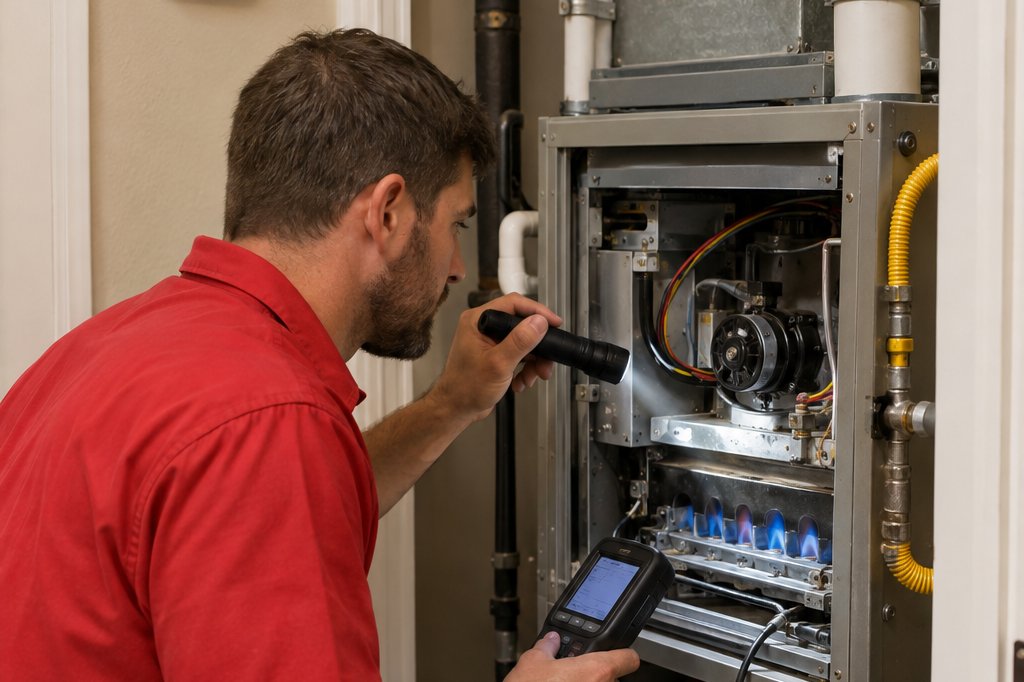
- A yellow or flickering burner flame. A healthy gas flame is mostly blue. Yellow or orange can mean incomplete combustion.
- Soot or rust around the furnace, the flue pipe, or the vent where it exits the roof.
- Extra condensation on windows near the furnace or water heater.
- A furnace that short-cycles, turning on and off over and over, or keeps tripping its safety switches.
- A burning or chemical smell that lasts more than the first few minutes of the season. A little dust burn-off on day one is normal. A smell that sticks around is not.
How to protect your home
1. Install CO alarms on every level
Put a carbon monoxide alarm on every floor of your home and outside each sleeping area. If your home has a gas furnace, gas water heater, or an attached garage, this is not optional. Test the alarms monthly and replace them according to the manufacturer’s date, usually every 5 to 7 years.
2. Get your furnace inspected every year
The CDC recommends having your heating system, water heater, and any other gas, oil, or coal-burning appliances serviced by a qualified technician every year. A real tune-up is more than a filter change. A technician should check the heat exchanger for cracks, test the flue draft, inspect the burners and flame sensor, and confirm all safety controls work.
3. Keep vents and flues clear
Make sure the furnace and water heater flues aren’t disconnected, rusted through, or blocked by bird nests or debris. Keep storage boxes, laundry and cleaning chemicals away from the furnace closet.
4. Never use the wrong heat source
During a freeze or a power outage, never heat your home with a gas oven, stovetop, charcoal grill, or a generator running in the garage, even with the door open.
Is your furnace older than 15 years?
Heat exchangers crack with age. If your furnace is 15 to 20 years old and showing any of the warning signs above, it may be time to talk about replacement. We give free, no-pressure estimates on new systems, and we offer financing through three different lenders so you can choose the payment option that works best for you.
$59 furnace tune-up for DFW homeowners
Brayden J Mechanical is a veteran-owned, licensed HVAC company (TACLA145034C) based in Haltom City. Our $59 furnace and AC tune-up includes a full safety inspection of your heating system, with written pricing before any repair work.
Call (682) 277-9944 or book online to get your furnace checked before the next cold front.