Your attic is the hottest room in your house. On a summer afternoon in DFW it gets far hotter than the air outside, and the only thing standing between that heat and your living room ceiling is a layer of insulation. In a lot of North Texas homes, that layer is thinner than it should be.
Here’s what the energy code calls for in our area, why so many existing homes fall short, and why bringing your attic up to code is one of the best things you can do for comfort and your electric bill.
What the code calls for in DFW
Insulation requirements are based on climate zone. Dallas-Fort Worth sits in Climate Zone 3. Under the 2015 International Energy Conservation Code, which is the edition the City of Fort Worth currently uses, the minimum for ceilings and attics in Climate Zone 3 is R-38, according to the Insulation Institute’s Texas code summary. Newer editions of the code raise that to R-49 for our climate zone.
For existing homes, ENERGY STAR recommends bringing an uninsulated attic in our zone up to R-49, and adding insulation up to R-38 if you already have 3 to 4 inches.
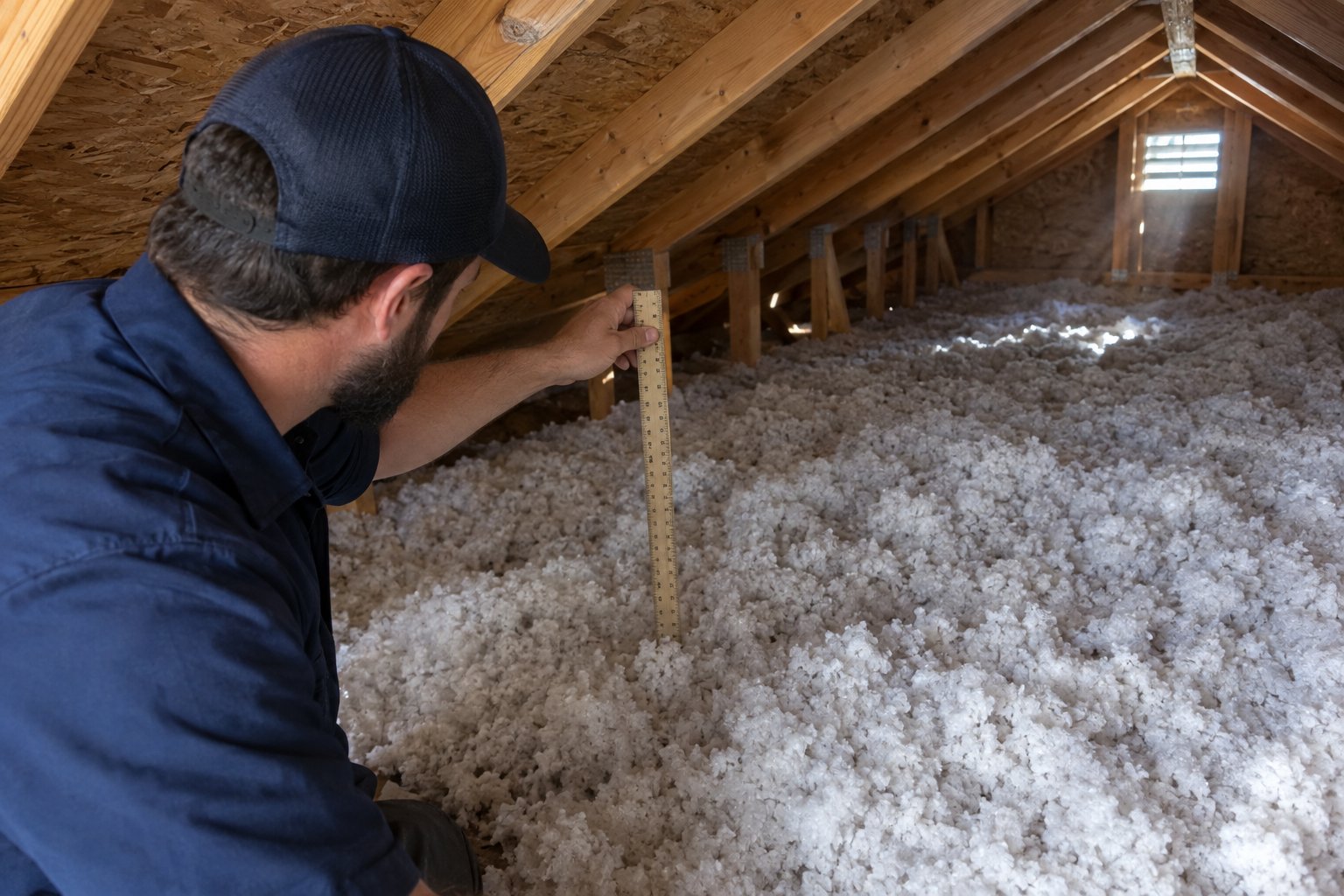
To put that in perspective, R-38 is roughly 10 to 14 inches of blown-in insulation, depending on the material. Many older homes we inspect have far less, especially where it’s been packed down, blown around, or disturbed by years of work in the attic.
Is my home required to meet today’s code?
Not automatically. Energy codes apply to new construction and to certain permitted remodels and additions. An existing home built under an older code isn’t in violation just because it has less insulation than today’s standard. But the current code tells you what level of insulation builders and engineers consider the minimum for our climate. If your attic is well below it, you’re paying for that gap every month.
Why it matters so much in Texas heat
- Your AC is fighting the attic. Thin insulation lets attic heat radiate down through the ceiling all afternoon and into the evening, so your system runs longer and still struggles to keep up.
- Your ducts are up there too. Most DFW homes have the air handler and ductwork in the attic. More insulation on the attic floor doesn’t cool the attic itself, but it does slow the heat moving into your living space. Pair it with sealed ducts and you get the full benefit.
- Upstairs rooms stay hot. If your second floor is always warmer than downstairs, poor attic insulation is often a big part of the reason.
- It works in winter too. The same insulation that keeps heat out in August keeps it in during a January cold snap.
- It protects your equipment. An AC that doesn’t have to run nonstop all summer has less wear and a longer life.
Signs your attic needs more insulation
- You can see the tops of the ceiling joists. If the insulation doesn’t cover them, it’s almost certainly below R-38.
- Insulation looks thin, uneven, or packed down
- Bare spots near the attic hatch, around the air handler, or where work has been done
- High summer electric bills even with a newer AC system
- Ceilings that feel warm to the touch on hot afternoons
Doing it right: seal first, then insulate
Adding insulation on top of air leaks is like putting on a sweater with holes in it. Before we add insulation, we look for gaps around light fixtures, plumbing and wiring penetrations, the attic hatch, and the top plates of walls, and seal the ones that matter. We check the ductwork, then blow in insulation to an even depth that meets the code target, while keeping soffit vents clear so the attic can still breathe.
If you’re replacing your AC system, it’s the right time to look at insulation and ducts too. A better-insulated house may let you get by with a smaller, less expensive system that runs more efficiently.
Find out where your attic stands
We’ll measure your current insulation depth, check for air leaks and duct issues, and give you a written, upfront price to bring your attic up to code. No pressure and no guesswork.
Brayden J Mechanical serves Haltom City, Fort Worth, North Richland Hills, Keller, Haslet, Saginaw, Southlake, and the rest of DFW. Schedule an evaluation or call (682) 277-9944. Texas HVAC License TACLA145034C.