When most people think about air pollution, they picture traffic and smokestacks. But for most DFW families, the air that matters most is the air inside the house, because that’s where we spend most of our time. And from June through September, Texas heat keeps us shut indoors with the windows closed and the AC running nonstop.
According to the U.S. Environmental Protection Agency, indoor levels of many air pollutants can be two to five times higher than outdoor levels, and occasionally much higher than that. Here’s why that happens in North Texas homes, what it does to your family and your HVAC system, and what actually fixes it.
Why Texas heat makes indoor air worse
A tightly closed house is great for your electric bill, but it also traps whatever is inside. In a DFW summer, a few things stack up:
- The house never airs out. With temperatures in the high 90s and 100s, nobody opens a window. Dust, pet dander, cooking smoke, and chemicals from cleaners and furniture just keep recirculating.
- Humidity sneaks in. North Texas summers can be muggy, and an oversized or struggling AC system may cool the house without pulling enough moisture out. Humidity indoors above about 60% encourages mold and dust mites.
- Leaky ducts pull in attic air. Most DFW homes have ductwork running through the attic. Leaks on the return side suck in hot, dusty attic air, along with insulation fibers, and push it straight into your living space.
- Allergy season barely stops. Between cedar, ragweed, and grass pollens, North Texas has allergens in the air for much of the year, and they come inside on clothes, shoes, and pets.
Signs your indoor air needs attention
- Allergies, headaches, or stuffy noses that get better when you leave the house
- Dust building up on furniture just a few days after cleaning
- Musty smells, especially when the AC first kicks on
- Visible mold around vents, in bathrooms, or on the air handler
- Rooms that feel clammy or sticky even when the thermostat says it’s cool
- Filters that are gray and clogged well before their replacement date
What actually improves indoor air quality
There’s no single magic gadget. Good indoor air comes from a few basics working together:
1. Better filtration
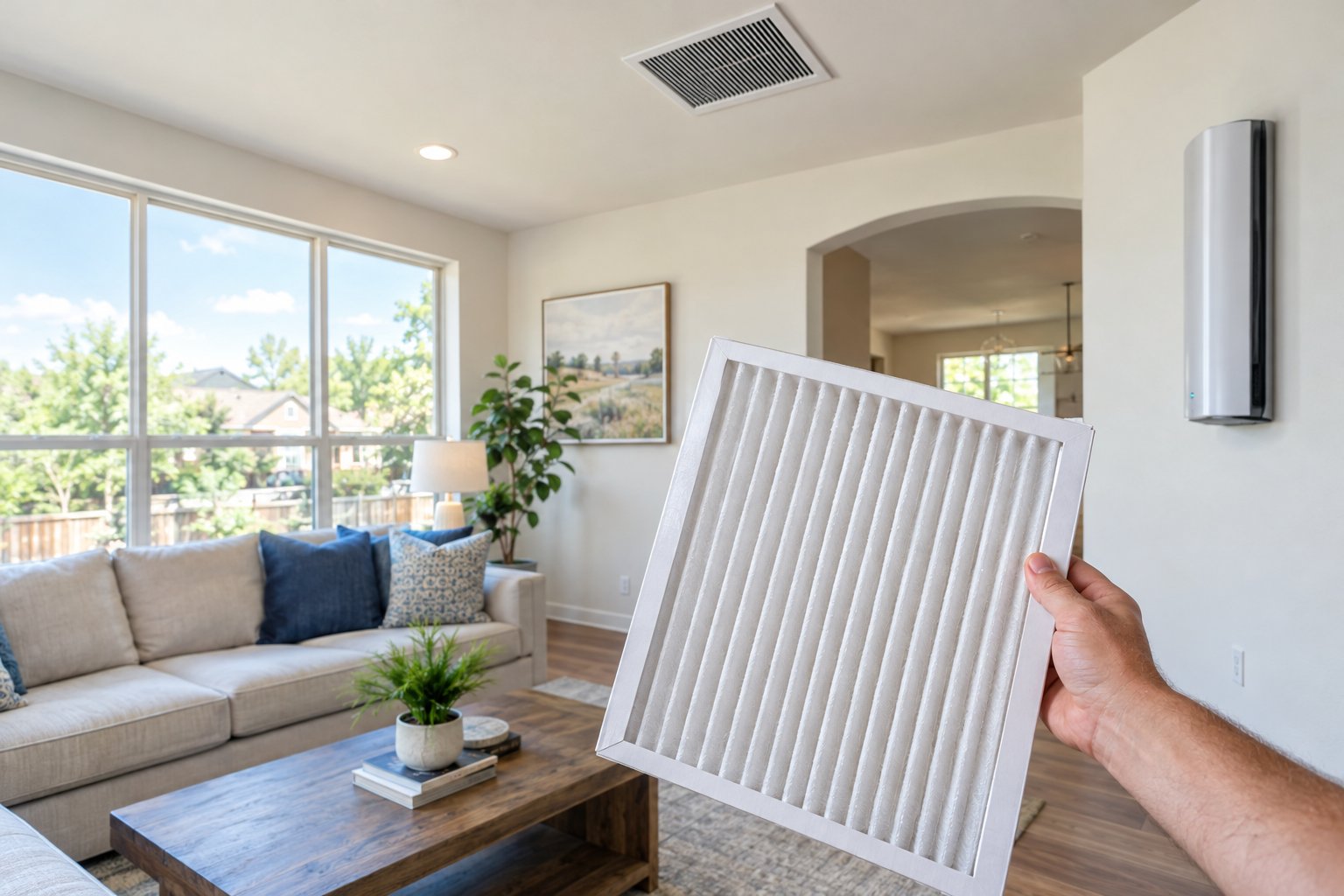
The cheap fiberglass filters most homes use protect the equipment, not your lungs. A properly sized pleated filter or a 4- to 5-inch media filter cabinet catches far more fine dust, dander, and pollen. The key is matching the filter to what your system’s blower can handle, so you don’t choke off airflow.
2. Humidity control
Keeping indoor humidity between about 40% and 60% makes the house feel cooler and keeps mold and dust mites in check. Sometimes that means fixing a system that’s oversized for the home. Other times it means adding a whole-home dehumidifier.
3. Sealed ductwork
If your return ducts are leaking in the attic, no filter can keep up. Sealing the ducts stops attic dust and insulation from being pulled into the system in the first place. (We cover this in detail in our duct sealing post.)
4. Air purification and UV
For families with allergies, asthma, or pets, whole-home air purifiers and UV lights installed in the air handler can reduce airborne particles and keep the coil free of mold and bacterial growth.
5. Regular maintenance
A dirty coil, a clogged condensate drain, or a moldy drain pan will undo everything else. Our $59 preventative maintenance visit includes checking the parts of the system that affect what you breathe.
Better air also means a healthier HVAC system
The same dust that ends up in your lungs also coats your blower wheel and evaporator coil. That buildup restricts airflow, makes the system run longer, and shortens equipment life. In a Texas summer, when the AC may run most of the day, clean air and a clean system go hand in hand.
Get an honest indoor air assessment
We won’t sell you a gadget you don’t need. We’ll look at your filtration, humidity, ductwork, and equipment, tell you what’s actually causing the problem, and give you options at a written, upfront price.
Brayden J Mechanical serves Haltom City, Fort Worth, North Richland Hills, Keller, Haslet, Saginaw, Southlake, and the rest of DFW. Schedule service online or call (682) 277-9944. Texas HVAC License TACLA145034C.